What Is Desiccant in Compressed Air Dryers?
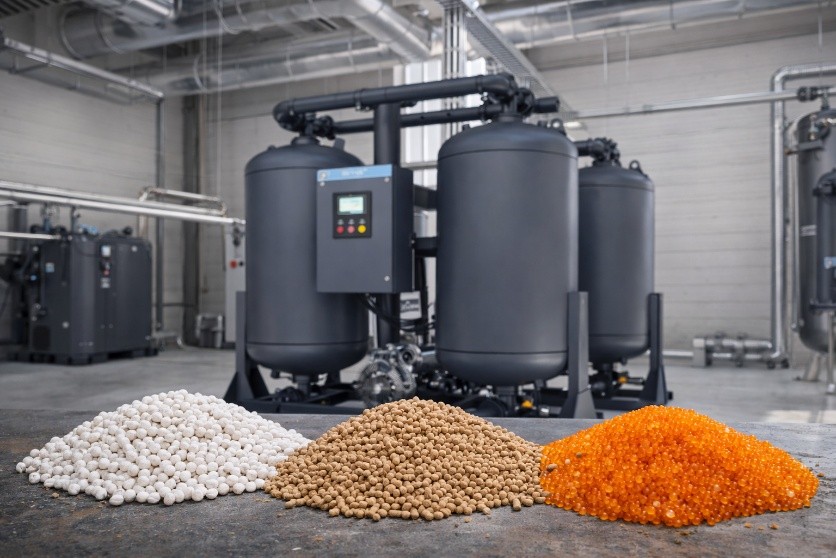
What Is Desiccant in Compressed Air Dryers?
Types, Performance, and How to Choose the Right One
Compressed air systems are only as reliable as the air quality they produce. Moisture is one of the most damaging contaminants in compressed air, leading to corrosion, equipment failure, and product contamination. That’s where desiccant in compressed air dryers plays a critical role.
Desiccant dryers are engineered to remove water vapor from compressed air streams, achieving extremely low dew points that refrigerated dryers simply cannot match. But not all desiccants are created equal—and choosing the right type can directly impact system performance, efficiency, and maintenance costs.
This guide breaks down the most common desiccants used in compressed air dryers, how they work, and how to select the best option for your application.
What Is Desiccant and How Does It Work in Compressed Air Dryers?
Desiccant is a hygroscopic material that adsorbs moisture from compressed air. Unlike absorption, where a substance dissolves moisture, adsorption binds water vapor to the surface of the desiccant material.
In a typical twin-tower desiccant air dryer, compressed air flows through one tower filled with desiccant while the other tower regenerates. This cycle allows for continuous drying and ensures consistent dew point performance.
Key Performance Metric:
· Pressure Dew Point (PDP): The temperature at which moisture condenses under pressure.
o Desiccant dryers commonly achieve -40°F to -100°F PDP
What Types of Desiccant Are Used in Compressed Air Dryers?
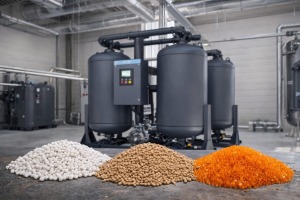
1. Activated Alumina
Activated alumina is one of the most widely used desiccants in industrial compressed air systems.
Key Characteristics:
· High surface area for adsorption
· Strong mechanical strength
· Good resistance to liquid water
Best For:
· General-purpose compressed air drying
· Applications requiring consistent performance and durability
2. Molecular Sieve
Molecular sieve desiccants are engineered with uniform pore sizes that selectively adsorb molecules based on size.
Key Characteristics:
· Extremely high moisture adsorption capacity
· Capable of achieving ultra-low dew points
· Strong affinity for water molecules
Best For:
· Critical applications requiring -80°F to -100°F dew points
· Instrument air, pharmaceuticals, and sensitive processes
3. Silica Gel
Silica gel is another commonly used desiccant, though it behaves differently from activated alumina and molecular sieve.
Key Characteristics:
· High adsorption capacity at higher relative humidity
· Lower performance at very low dew points
· More sensitive to liquid water contamination
Best For:
· Applications with moderate drying requirements
· Systems where ultra-low dew points are not required
How Do You Choose the Right Desiccant for Your Air Dryer?
What dew point do you need?
· -40°F PDP: Standard industrial applications → Activated Alumina
· -80°F or lower: Critical environments → Molecular Sieve
What is your operating environment?
Operating environment factors to consider include:
· Inlet air temperature
· Oil contamination levels
· Liquid water carryover
· System cycling frequency
For example, systems with poor pre-filtration may benefit from activated alumina due to its durability and resistance to liquid water.
How important is energy efficiency to you?
Desiccant selection can influence:
· Regeneration energy requirements
· Purge air consumption
· Dryer cycling efficiency
Molecular sieve offers superior adsorption but may require more controlled regeneration conditions.
How Long Does Desiccant Last in a Compressed Air Dryer?
Desiccant life depends on several factors:
· Air quality (oil and particulate contamination)
· Dryer type (heatless vs heated)
· Operating conditions
Typical lifespan:
· 2 to 5 years under proper conditions
Premature failure is often caused by:
· Oil fouling
· Liquid water exposure and oversaturation
· Improper regeneration
What Are the Signs That Desiccant Needs to Be Replaced?
Common indicators:
· Rising pressure dew point
· Increased moisture in downstream equipment
· Channeling or dusting within the dryer
· Reduced adsorption efficiency
Ignoring these signs can lead to:
· Corrosion in piping
· Valve and actuator failure
· Product contamination
Why Is Desiccant Critical for Compressed Air System Performance?
Moisture in compressed air systems can cause:
· Rust and corrosion in piping and equipment
· Freeze-ups in cold environments
· Reduced efficiency in pneumatic systems
· Contamination in sensitive applications
Desiccant dryers provide the deep drying capability required for industrial reliability, particularly where refrigerated dryers fall short.
Can You Mix Different Types of Desiccant?
In some cases, yes.
Layered desiccant beds may include:
· Activated alumina (top layer) for bulk moisture removal
· Molecular sieve (bottom layer) for final polishing
This approach:
· Improves efficiency
· Extends desiccant life
· Optimizes overall dryer performance
Final Thoughts: Optimizing Your Compressed Air Dryer with the Right Desiccant
Selecting the right desiccant is not just a maintenance decision, it’s a performance decision. From achieving the correct dew point to maintaining system efficiency and protecting downstream equipment, the type of desiccant you choose has a direct impact on your operation.
For most industrial applications, activated alumina provides a reliable, cost-effective solution, while molecular sieve is ideal for high-performance, low-dew-point requirements.
Understanding your system’s requirements and maintaining your desiccant properly will ensure long-term reliability and optimal compressed air quality.
Frequently Asked Questions About Desiccant in Compressed Air Dryers
What is the most common desiccant used in compressed air dryers?
Activated alumina is the most widely used due to its balance of performance, durability, and cost-effectiveness.
What dew point can desiccant dryers achieve?
Most systems achieve -40°F PDP, while specialized systems can reach -100°F PDP using molecular sieve.
How often should desiccant be replaced?
Typically, every 2–5 years, depending on system conditions and air quality.
What happens if desiccant fails?
Moisture passes through the system, leading to corrosion, equipment damage, and reduced system efficiency.
Is molecular sieve better than activated alumina?
Not necessarily. Molecular sieve is better for ultra-low dew points, but activated alumina is often more durable and cost-effective for general use.
By understanding desiccant types and their applications, you can make more informed decisions that improve performance, reduce downtime, and extend the life of your compressed air system.